Dietetics vs. Naturopathy: What’s the difference?
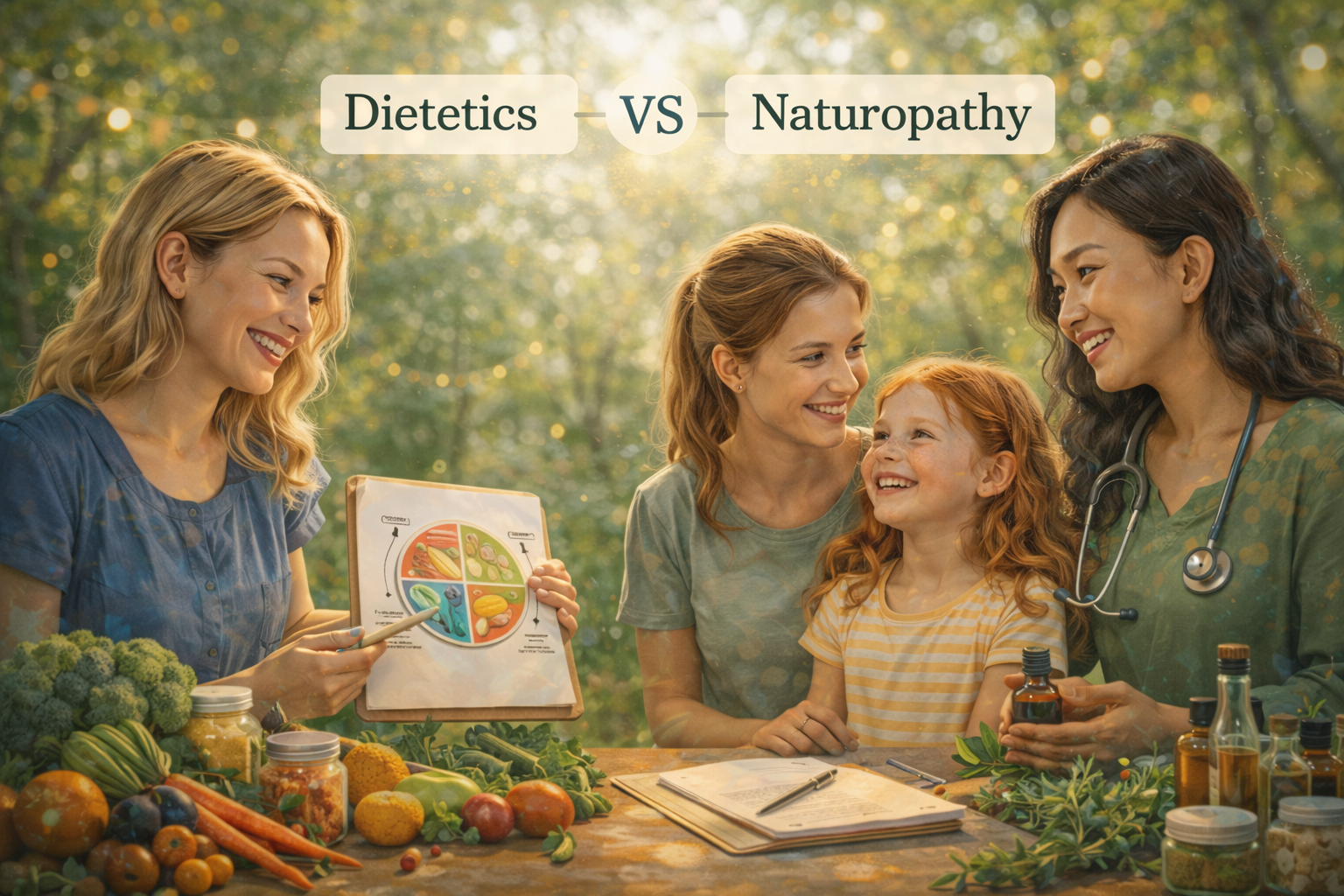
When families begin exploring wellness services, one of the most common questions we hear is: What’s the difference between a Registered Dietitian and a Naturopathic Doctor?
Both professionals care deeply about supporting health. Both often talk about food, lifestyle, and prevention. But their training, scope of practice, and approach can differ in important ways.
Understanding these differences can help you decide which support best fits your needs — or whether a collaborative approach may be most helpful.
What Is Dietetics?
Dietetics is the regulated practice of applying nutrition science to promote health and manage disease. Registered Dietitians (RDs) complete accredited university programs in nutrition and dietetics, followed by supervised clinical training and a national registration examination. In Ontario, dietitians are regulated health professionals.
Dietitians provide evidence-based nutrition therapy for a wide range of concerns, including:
Pediatric feeding challenges and picky eating
Growth and developmental concerns
Digestive conditions
Food allergies and intolerances
Chronic conditions such as diabetes or cardiovascular risk
Family nutrition patterns and sustainable meal planning
Dietitians rely on peer-reviewed research and clinical guidelines. Their focus is practical, individualized, and grounded in established nutrition science. If you are looking for structured, medically informed nutrition support — particularly for a diagnosed health condition — a dietitian is often the first place to start.
What Is Naturopathy?
Naturopathy is a regulated healthcare profession in Ontario that takes a holistic and integrative approach to health. Naturopathic Doctors (NDs) complete four years of graduate-level medical training at accredited naturopathic medical schools and are licensed through provincial regulatory bodies.
Naturopathy focuses on:
Identifying and addressing root causes
Supporting the body’s natural healing processes
Prevention and long-term wellness
Integrative care that may complement conventional medicine
Naturopathic care may include:
Nutrition counselling
Lifestyle and stress management
Herbal medicine
Targeted supplementation
Functional lab testing (where appropriate)
While naturopathic doctors use scientific research, their framework often integrates traditional and natural therapeutic modalities alongside modern evidence. Many families seek naturopathy for concerns such as hormonal balance, immune support, stress-related symptoms, sleep concerns, and digestive health.
Key Differences at a Glance
Training & Regulation
Both dietitians and naturopathic doctors are regulated health professionals in Ontario, but their training pathways differ. Dietitians specialize specifically in clinical nutrition science. Naturopathic doctors complete broader medical training in natural and integrative therapies.
Scope of Practice
Dietitians focus specifically on nutrition assessment and medical nutrition therapy. Naturopathic doctors address nutrition as part of a wider holistic treatment plan that may include supplements, herbal medicine, and lifestyle interventions.
Approach
Dietetics tends to be highly structured and guideline-driven, especially when managing specific medical conditions. Naturopathy emphasizes whole-person care and may incorporate a broader range of complementary strategies.
Do You Have to Choose?
Not necessarily.
In many cases, dietitians and naturopathic doctors can work collaboratively. For example:
A child with feeding challenges may benefit from structured nutrition therapy with a dietitian while also addressing gut health or immune concerns with a naturopathic doctor.
A teen navigating stress-related digestive symptoms may benefit from both evidence-based dietary adjustments and broader lifestyle support.
At Wonderstruck, we believe integrative care works best when professionals collaborate — always prioritizing safety, evidence, and the individual needs of the child or family.
How Do I Know What’s Right for Me?
If your primary concern involves nutrition for a diagnosed medical condition, growth, or structured dietary support, starting with a Registered Dietitian is often recommended.
If you are seeking a broader, root-cause approach that includes natural therapies alongside lifestyle changes, naturopathic care may be helpful.
If you’re unsure, we can help guide you toward the right fit.
Because wellness is not one-size-fits-all — and understanding your options is the first step toward making informed, confident decisions for your family.